
Mango Pudding
Imagine a vibrant, sun-kissed dessert that dances on your taste buds like the gentle sway of a mango tree in the warm breeze. Welcome to Mango Pudding – a creamy, luscious treat that encapsulates the essence of tropical bliss. This recipe takes you on a step-by-step journey to create a delicate, velvety pudding that bursts with the sweet and tangy aroma of ripe mangoes. Perfect for warm evenings or festive gatherings, this dessert will not only satiate your sweet cravings but will also leave everyone enchanted, yearning for another scoop!
History / Fun Fact
Mango Pudding has its roots in the culinary traditions of Southeast Asia, where the mango is considered not just a fruit but a symbol of prosperity and joy. The tropical fruit has been celebrated for centuries, finding its way into the hearts (and stomachs) of many. While variations of mango desserts abound, the creamy pudding emerged as a popular choice in regions like Hong Kong, often served in dim sum eateries as a refreshing end to a meal. The pudding symbolizes the blending of culinary cultures, reflecting the love for fresh, natural flavors and the simplicity of dessert-making.
Ingredients
12 oz ripe mangoes: Peel, pit, and dice these sun-kissed beauties. Their rich, golden-orange flesh is sweet, tender, and voluminous, providing a delightful burst of summer in every spoonful.
2 tbsp cold water: This will awaken the gelatin’s potential, allowing it to transform our pudding into a heavenly consistency.
1.5 tbsp gelatin (or 1.5 tsp agar-agar powder): This magical ingredient gives the dessert its signature soft yet firm texture, providing the perfect balance between creaminess and stability.
1.5 tbsp white granulated sugar: Just a sprinkle of this will enhance the natural sweetness of the mangoes, creating a luscious symphony of flavors.
0.54 cups coconut milk (full fat): Rich and creamy, this will envelop the mango puree in a cocoon of tropical richness, imparting a luxurious feel.
4 tbsp evaporated milk or coconut milk: This addition elevates the creaminess level, making each bite even more indulgent and rewarding.
Cooking Time & Tips For Mango Pudding
Creating the perfect Mango Pudding can be a quick endeavor if you are pressed for time, taking as little as 30 minutes to prepare (not including chilling time). However, for an elevated experience, allowing it to set overnight ensures a firmer consistency and deeper flavors.
Quick Tips:
- Always use ripe mangoes for the best flavor; unripe fruits will lead to a less sweet pudding.
- Make sure to whisk gently but thoroughly – this blends the flavors while keeping the mixture smooth and airy.
- If you want to experiment a little, consider infusing your milk with pandan leaves for a unique flavor twist.
Step-by-Step Directions
Prepare the Mango Puree: Begin by transferring your lovingly diced mango chunks into a blender or food processor. Blend until you achieve a luxuriously smooth puree. For an even silkier texture, you might consider straining the puree gently to remove any fibrous bits.
Activate the Gelatin: In a small bowl, combine the cold water and gelatin. Allow this mixture to sit for a few minutes, letting the gelatin thicken slightly before being incorporated into the pudding.
Create the Mixture: Now, in a saucepan over low heat, add your sugar, coconut milk, and the luscious mango puree. Gently whisk until everything combines beautifully into a uniform mixture, releasing intoxicating aromas as it heats.
Dissolve the Gelatin: Slowly introduce the gelatin mixture into your cooking mango mixture. Keep stirring until the gelatin dissolves completely. The key here is patience; avoid letting it come to a boil, as this can alter the desired silky texture.
Set Your Pudding: Once combined, pour the blissful mixture into individual serving bowls or molds. If you’re feeling generous, you could even layer it into a beautiful glass dessert dish. Refrigerate for a minimum of 6 hours, or ideally, let it set overnight to achieve that perfect pudding consistency.
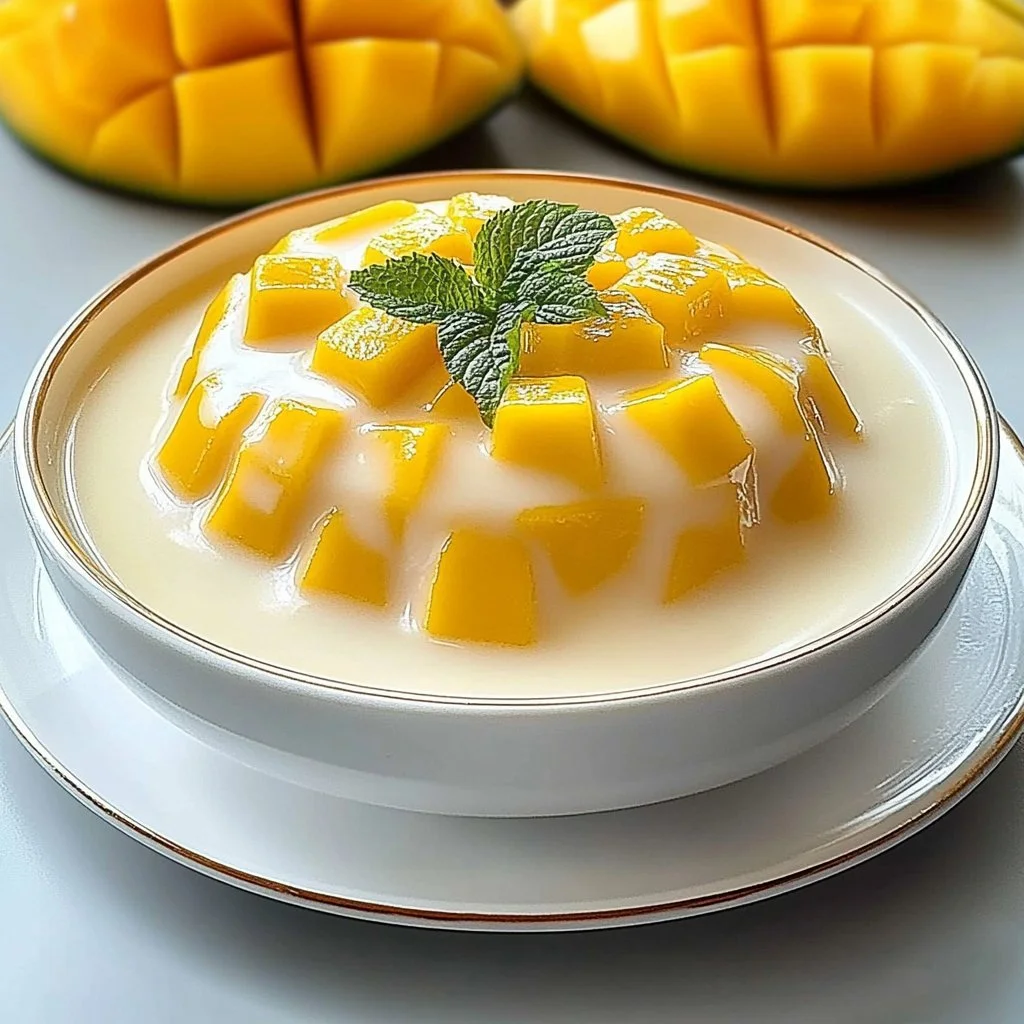
Serve with Flair: When ready to indulge, serve the pudding chilled, topped with a splash of evaporated milk or an extra drizzle of coconut milk for an opulent touch. Garnish with fresh mint or a slice of mango for a delightful presentation.
Serving Suggestions & Occasions
Mango Pudding is incredibly versatile, making it an ideal dessert for various occasions. Serve it as a refreshing end to a summer barbecue, a light treat after a hearty meal during festive celebrations, or a hit on a cozy family dinner night. Pair it with tropical fruits or even a scoop of coconut sorbet for an unforgettable dessert experience.
Common Mistakes For Mango Pudding
One of the most common blunders is not letting the gelatin dissolve completely; this can result in a grainy texture. Another mistake is using underripe mangoes, which can lead to a less flavorful pudding. Just as bad is boiling the mixture, which can affect the softness of the pudding. Remember to use high-fat coconut milk for richness and to stir gently to keep the airiness intact.
Healthier Alternatives & Variations
For a lighter version, swap out the coconut milk with a low-fat alternative or cut down on the sugar by using natural sweeteners like honey or agave syrup. You can also experiment with adding chia seeds for extra texture and fiber. To switch it up even further, try incorporating lime zest for a citrusy kick, or blend in basil leaves for an herbaceous twist.
FAQs
Can I use frozen mangoes for this recipe?
Yes, frozen mangoes work well! Just ensure they are fully thawed and patted dry before blending.Can I make this pudding vegan?
Absolutely! Substitute gelatin with agar-agar powder for a plant-based option, and ensure all the milk used is dairy-free.How long will this pudding last in the fridge?
Mango Pudding typically stays fresh for about 3-4 days when stored covered in the refrigerator.Can I use any other fruits in this recipe?
Yes, you can substitute mango with other fruits like passion fruit or banana, but adjust sugar levels accordingly based on sweetness.Is it necessary to strain the mango puree?
This is optional! Straining does ensure a silky-smooth texture, but if you enjoy a bit of fiber, feel free to skip this step.What can I do with leftover mangoes?
Use them in salads, smoothies, or even salsas to complement grilling meats or fish.
Conclusion
This Mango Pudding is not just a dessert; it’s a tropical embrace in a bowl, a confectionary testament to the joys of simple ingredients combined with love and care. The balanced flavors and creamy texture are simply irresistible. So, gather your ingredients and let the blend of mangoes, coconut, and a hint of sweetness whisk you away on a culinary adventure that awaits you in the kitchen. Try this delightful recipe today—you’ll be glad you did!
Mango Pudding
Ingredients
Method
- Begin by transferring the diced mango chunks into a blender or food processor. Blend until you achieve a luxuriously smooth puree.
- In a small bowl, combine cold water and gelatin. Allow to sit for a few minutes to thicken.
- In a saucepan over low heat, add sugar, coconut milk, and mango puree. Gently whisk until combined.
- Slowly introduce the gelatin mixture into your mango mixture and stir until completely dissolved.
- Pour the mixture into serving bowls or molds. Refrigerate for at least 6 hours, or overnight for best results.
- Serve chilled topped with evaporated milk or coconut milk and garnish with fresh mint or a slice of mango.