
Ribeye Steak
Indulging in a perfectly cooked Ribeye Steak is an experience that transcends mere nourishment—it’s a celebration of flavors, textures, and emotions that dance on your palate. This recipe, heralded for its sumptuous richness and tender juiciness, invites you to embark on a Step-by-Step culinary journey that will transform your kitchen into a haven of aromatic delight. The intoxicating scent of garlic and herbs fills the air, mingling with the hearty aroma of seared beef, making it impossible to resist the allure of this delicious dish.
History / Fun Fact
The ribeye steak has its roots deep in the culinary traditions of the United States, where it became a household favorite for its marbled texture and rich taste. Its name—a combination of "rib" and "eye," referencing the eye-shaped muscle at the center of the cut—captures the essence of this exceedingly tender piece of meat. Historically, ribeye steaks were often enjoyed in hearty, rustic steakhouses, embracing the communal spirit of sharing a substantial meal with family and friends.
In a fun twist, the ribeye is said to have been favored by cowboys on the open range, providing them with the sustenance needed after a long day of wrangling cattle. Today, this cut remains a staple in many modern kitchens, with chefs and home cooks alike embracing its versatility and robust flavors.
Ingredients
To craft a mouthwatering Ribeye Steak, gather the following ingredients:
- 2-inch thick bone-in ribeye steak (about 2 lbs.): This luscious cut, rich in marbling, promises to deliver a juicy and tender bite.
- Kosher salt: To enhance the steak’s natural flavors and create a beautiful crust.
- Freshly ground black pepper: Adding warmth and depth with its aromatic notes.
- 1 Tbsp. extra-virgin olive oil: Infusing a hint of fruitiness that complements the deep flavors of the beef.
- 2 Tbsp. unsalted butter: For that indulgent, velvety finish.
- 3 garlic cloves, lightly smashed: Bursting with flavor, elevating the dish to gourmet heights.
- 2-3 sprigs fresh thyme: Fragrant and earthy, bringing freshness to the dish.
- 2-3 sprigs fresh rosemary: Aromatic and woody; this herb adds complexity to the flavor palette.
- Flaky sea salt: For a touch of sprinkle before serving, enhancing each bite.
Each ingredient magically coalesces to create a stunning culinary masterpiece that not only satiates hunger but stirs the spirit.
Cooking Time & Tips for Ribeye Steak
Cooking a Ribeye Steak can be as quick as a flash or a slow, contemplative affair. A quick sear followed by a gentle finish can yield perfectly cooked meat in as little as 20 minutes. Alternatively, a slower approach can allow you to build flavors, especially if finishing the steak on the grill or in the oven.
For success, make sure your steak is at room temperature before cooking—this helps in achieving that glorious, even doneness. Season generously with kosher salt and black pepper; the seasoning draws the moisture to the surface, enhancing flavor and texture. Use high-quality meat for the best experience. If possible, seek out ribeyes from grass-fed cattle for a touch of extra flavor and tenderness.
Step-by-Step Directions
Season generously: Lay your beautiful ribeye steak on a plate and coat it generously with kosher salt and freshly ground black pepper—a simple yet essential step that sets the stage for flavor.
Heat your skillet: In a large cast-iron skillet, pour in the extra-virgin olive oil. Warm it over medium-high heat until it shimmers with intensity, signaling the oil is hot and ready.
Sear the steak: Gently place the seasoned steak in the hot skillet, listening for that gratifying sizzle. Allow the steak to cook undisturbed for about 6-7 minutes, until a dark, flavorful crust forms on the bottom.
Flip and continue cooking: Carefully flip the steak using tongs, and let it enjoy another 6 minutes undisturbed on the other side.
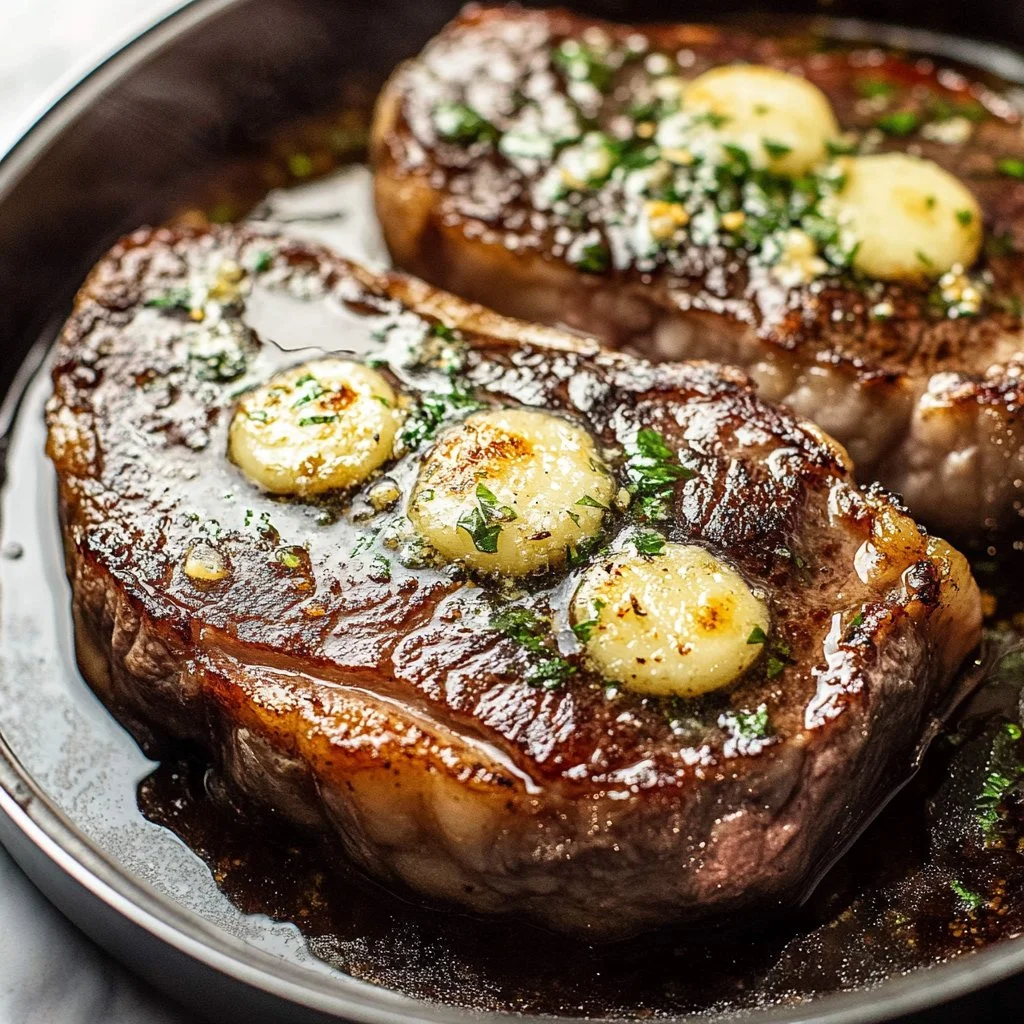
Infuse with flavor: Reduce the heat to medium-low and add the unsalted butter, smashed garlic, thyme, and rosemary. As the butter melts, use a spoon to baste the top of the steak, allowing those flavors to permeate the meat. Flip the steak halfway through this addition, allowing it to reach medium-rare, which is about 120 degrees Fahrenheit. This should take an additional 5 minutes.
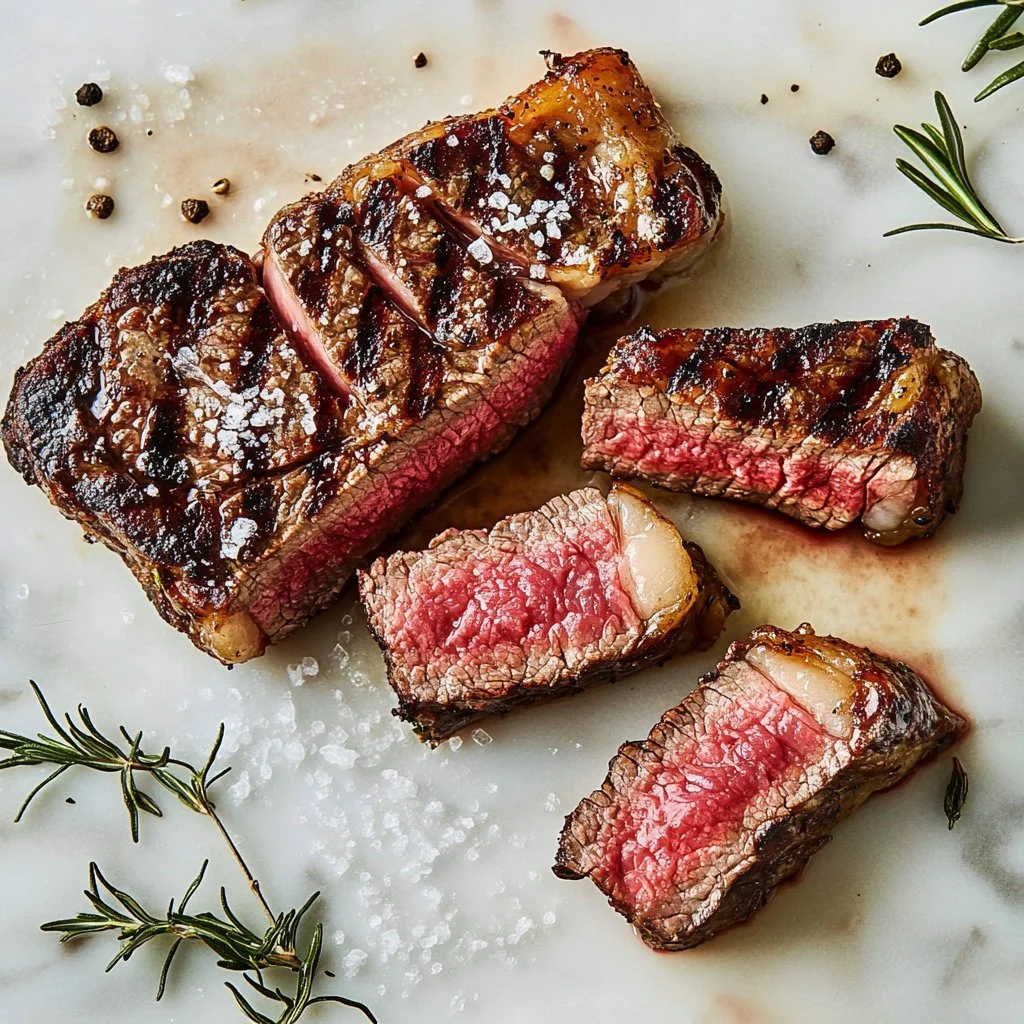
Rest before slicing: Once beautifully cooked, transfer the steak to a cutting board and let it rest for 10 minutes—a critical step that enables the juices to redistribute, ensuring a juicy bite.
Serve with flair: Finally, sprinkle with flaky sea salt to amplify the flavors and serve with your favorite sides—perhaps roasted vegetables or flaky mashed potatoes.
Serving Suggestions & Occasions
A wonderfully cooked Ribeye Steak can be a stunning centerpiece for any gathering—from cozy family dinners to impressive barbecues with friends. Pair it with robust red wines, such as Cabernet Sauvignon or Malbec, and complement it with sides like creamy mashed potatoes, grilled asparagus, or a refreshing arugula salad for a well-rounded meal. Consider serving it during holidays, birthdays, or any celebration that calls for a touch of culinary luxury.
Common Mistakes for Ribeye Steak
Over-seasoning: While seasoning is crucial, overdoing it can overwhelm the steak’s natural flavors.
Underestimating resting time: Cutting into a steak too early means losing those precious juices; patience is key.
Cooking at the wrong temperature: Ensure your skillet is hot enough for a good sear; a cool pan will not yield that sought-after crust.
Neglecting doneness levels: Invest in a good meat thermometer to avoid guesswork and ensure you reach your desired level of doneness.
Healthier Alternatives & Variations
For a healthier twist, consider using a leaner cut of beef, such as sirloin or flank steak, which still offer great flavor but are lower in fat. You can also marinate the meat in balsamic vinegar and herbs for added flavor and tenderness without the extra calories from butter. For a plant-based alternative, grill portobello mushrooms; they bring a robust umami flavor and can serve as a satisfying centerpiece for vegetarian gatherings.
FAQs
1. What is the ideal internal temperature for ribeye steak?
For medium-rare ribeye, aim for an internal temperature of 120-125°F.
2. Can I cook ribeye steak in the oven?
Yes, after searing, transfer the skillet to a preheated oven at 375°F to finish cooking.
3. How can I ensure my ribeye steak is tender?
Let it rest after cooking and consider marinating it beforehand to enhance tenderness.
4. Can I freeze ribeye steak?
Yes, wrap it well in plastic wrap and aluminum foil to prevent freezer burn.
5. How do I know when to flip the steak?
Look for a dark crust to form on the underside and remember—you want a good sear!
6. What side dishes pair well with ribeye?
Consider roasted potatoes, sautéed greens, or a light salad for balance.
Conclusion
The allure of Ribeye Steak is undeniable, and once you delve into this recipe, you’ll understand why. With its rich flavors and tender texture, it’s more than just a meal; it’s a sensory experience that unites us around the table. Gather your ingredients, and step into your kitchen to whip up this culinary masterpiece today, savoring every moment and bite!
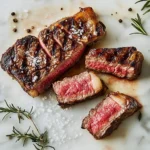
Ribeye Steak
Ingredients
Method
- Lay your ribeye steak on a plate and coat it generously with kosher salt and freshly ground black pepper.
- In a large cast-iron skillet, pour in the extra-virgin olive oil and heat it over medium-high heat until it shimmers.
- Gently place the seasoned steak in the hot skillet. Allow it to cook undisturbed for about 6-7 minutes until a dark crust forms.
- Carefully flip the steak using tongs and let it cook undisturbed for another 6 minutes.
- Reduce the heat to medium-low and add the unsalted butter, smashed garlic, thyme, and rosemary. Baste the top of the steak with melted butter for about 5 minutes.
- Once cooked to medium-rare (about 120 degrees Fahrenheit), transfer the steak to a cutting board and let it rest for 10 minutes.
- Sprinkle with flaky sea salt before serving.